Pool deck construction in Frederick

Outdoor Living Upgrades

Pool Deck Construction in Frederick, MD

Decking around an in-ground or above-ground pool — slip-resistant material, drainage that directs water away from the pool equipment pad, and material that tolerates constant moisture and chlorine exposure.

01Material Selection for Pool Environments

Pool decks are wet constantly. Standard pressure-treated wood wicks water, stays wet, and becomes slippery with algae. Composite decking engineered for wet environments, PVC decking, or IPE are the appropriate material choices for a pool surround.

02Drainage Away From the Pool

Pool deck drainage must move water away from the pool equipment pad and away from any house foundation. Positive slope away from the pool structure is required — typically 1 inch per 10 feet at minimum.

03Code Setbacks and Barriers

Maryland requires barrier fencing around pools to prevent unsupervised child access. Deck construction around a pool must be coordinated with barrier requirements — the deck itself may be part of the barrier if constructed to the correct height and with appropriate gate hardware.

Frederick Deck Planning

Pool Deck Construction: Where Wet Conditions Change the Design

A pool deck operates in conditions that accelerate every wood failure mechanism: constant moisture, direct sun, chemical exposure from pool water splash, and foot traffic on a wet surface. Material choices that work for a house-attached deck are often wrong for a pool surround. We specify materials for the actual conditions rather than treating a pool deck as a standard deck job with a different shape.

Deck Material Performance Around Pools

Pressure-treated pine: The least appropriate choice for a pool deck. It stays wet, develops surface mold and algae quickly without regular treatment, and the tannins in wet PT wood stain pool water chemistry when water drains back toward the pool edge. Not recommended for pool surrounds.

Composite decking: Performance varies significantly by product. Capped composite (a wood-plastic core wrapped in a protective shell) handles pool environments well — the cap resists moisture absorption and algae growth. Uncapped composite absorbs water and degrades. Specify capped composite products by name for pool applications.

PVC decking: No wood fiber content, fully impervious to moisture, lightest maintenance. Costs more than composite but performs better in constant-wet conditions. The best choice if the budget allows.

IPE (Brazilian hardwood): Dense hardwood that resists moisture and holds up in pool environments. Must be oiled periodically. High cost but exceptional durability and appearance.

When Pool Deck Construction Is Needed

  • New pool installation that needs surround decking
  • Existing concrete pool deck that has cracked or heaved
  • Expanding a partial pool deck surround
  • Replacing deteriorated wood pool decking

What Pool Deck Construction Includes

  • Material specification appropriate for pool environments
  • Positive drainage slope away from pool and equipment
  • Code-compliant barrier coordination
  • Joist and framing material appropriate for ground-contact exposure
What Happens Next

Our Pool Deck Construction Process

1

Site and Code Review

Pool barrier requirements reviewed and confirmed. Deck layout designed to coordinate with barrier/fencing requirements. Permit determined if required.

2

Framing and Drainage Design

Framing layout sets the drainage slope. Joist material selected for ground-proximate and constantly-wet conditions. Equipment pad access planned.

3

Framing Install

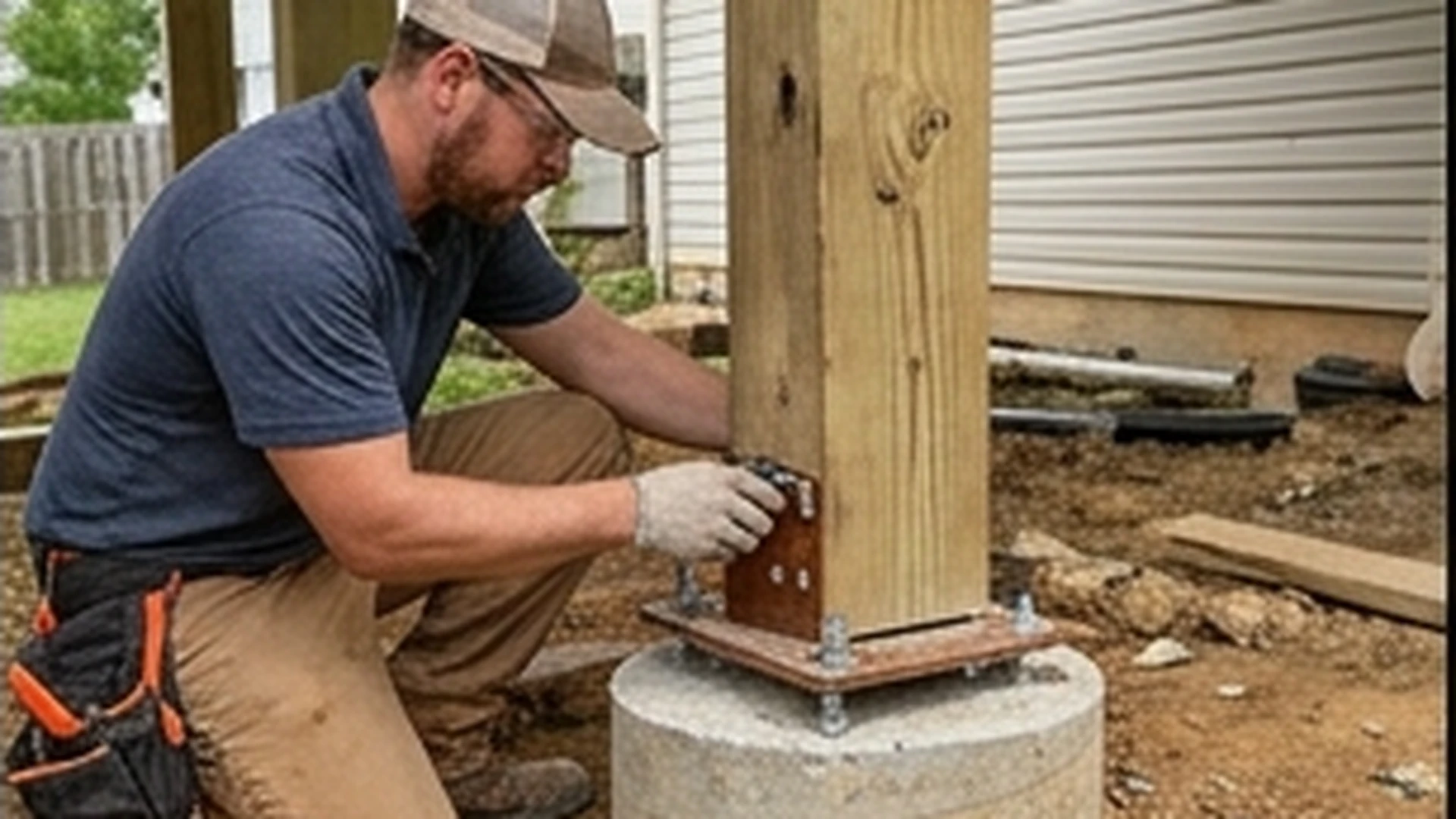
Footings and framing installed per the drainage design. Equipment pad surround framed and accessible for service.

4

Deck Surface Install

Decking installed at correct gap spacing for drainage. Surface checked for uniform slope. Perimeter edges finished and barrier interface confirmed.

Pool Barrier Requirements in Frederick County

Maryland requires a physical barrier at least 48 inches high around in-ground swimming pools to prevent unsupervised child access. The barrier must have self-closing, self-latching gates that open away from the pool. If the deck is adjacent to the pool, it may serve as the barrier if it is constructed to the correct height and gate hardware is installed at any access point. We coordinate the deck design with barrier compliance.

Permits for Pool Decks

Pool deck construction permits are typically tied to the pool permit if the pool is new. For decking added to an existing pool, a separate building permit is usually required in Frederick County for decks above a certain square footage. We confirm permit requirements before starting.

Maintenance Schedule

Capped composite and PVC pool decks: wash annually, inspect for algae growth in shaded sections, re-caulk gaps at the pool edge annually. IPE: oil every 1-2 years. A clean pool deck dries faster between uses, which reduces algae buildup and extends the surface life significantly.

Above-Ground Pool Deck Specifics

An above-ground pool deck requires access to the pool at the correct height — the deck surface is typically level with or slightly below the pool top rail. This changes the framing elevation and post heights compared to a standard grade-level deck. The structure must also not transfer loads to the pool wall — the deck frame must be self-supporting, not resting against the pool structure.

Frederick Pool Decking

New Pool or Upgrading an Existing Deck?

Tell us the pool type, deck area, and whether barrier fencing is in place and we will put together a complete pool deck scope.

Request Service

What to Ask About Pool Deck Construction

Ask specifically what decking material is being specified and why it is appropriate for a pool environment. Ask how the framing handles the drainage slope and what joist material is being used for the sections nearest the pool. Ask whether the deck layout coordinates with the pool barrier requirement — a deck that creates a way around the barrier will fail code inspection.

Questions About Pool Deck Construction

Can I use the same composite decking I used on my house deck for the pool deck?

Only if it is a capped composite product. Uncapped composite — which has exposed wood fiber at the board edges — will absorb pool splash and chlorinated water and degrade significantly faster than on a standard deck. We confirm the product specification before recommending it for pool applications. Some composite manufacturers specifically void warranties for pool-side installations with uncapped products.

How close can the deck get to the pool edge?

Deck framing must not transfer structural loads to the pool shell. The deck can surround the pool closely, but the framing must be self-supporting — a joist bearing on the pool edge rail is a structural problem for both the deck and the pool. We design the edge detail specifically to avoid that contact.

Does pool decking affect property taxes in Maryland?

A permitted deck addition — pool deck or otherwise — is typically a permanent improvement that is reported to the county assessor and may affect assessed value. Unpermitted additions do not avoid this; they create a liability at resale. We build to permit because it is the correct approach, not to maximize assessment.

Related Outdoor Living Upgrade Services