01HOA Approval FirstVirtually every townhome community in Frederick County has an HOA with architectural standards. Deck design, materials, colors, and footprint must be approved before a permit is pulled or construction starts. We prepare the submittal package.
02Ledger Attachment to the StructureTownhome rear walls are often brick, block, or stucco over a wood frame structure shared with adjacent units. Ledger attachment method depends on what is behind the exterior finish — we confirm the wall construction before designing the ledger detail.
03Footprint ConstraintsTownhome rear yards are typically narrow and bounded by fences or the rear property line. Setbacks, utility easements, and HOA footprint limits combine to define a very specific buildable area that the deck must fit within.
Why the HOA Process Takes Longer Than Expected
HOA architectural committees typically meet once a month. If a submittal arrives after the meeting cutoff, it waits until the next cycle. A submittal with incomplete information — missing a materials spec or a site plan — is returned for correction and misses another meeting. We submit complete packages the first time so approval doesn't require multiple meeting cycles.
Townhome Deck Materials and HOA Restrictions
Most Frederick County townhome HOAs specify approved deck materials and sometimes colors. Composite decking in specific color families, painted vs. stained finishes for wood, railing materials, and fascia board finishes may all be specified. We review the standards before selecting materials so the design doesn't need to be revised after HOA submittal.
Freestanding vs. Attached Townhome Decks
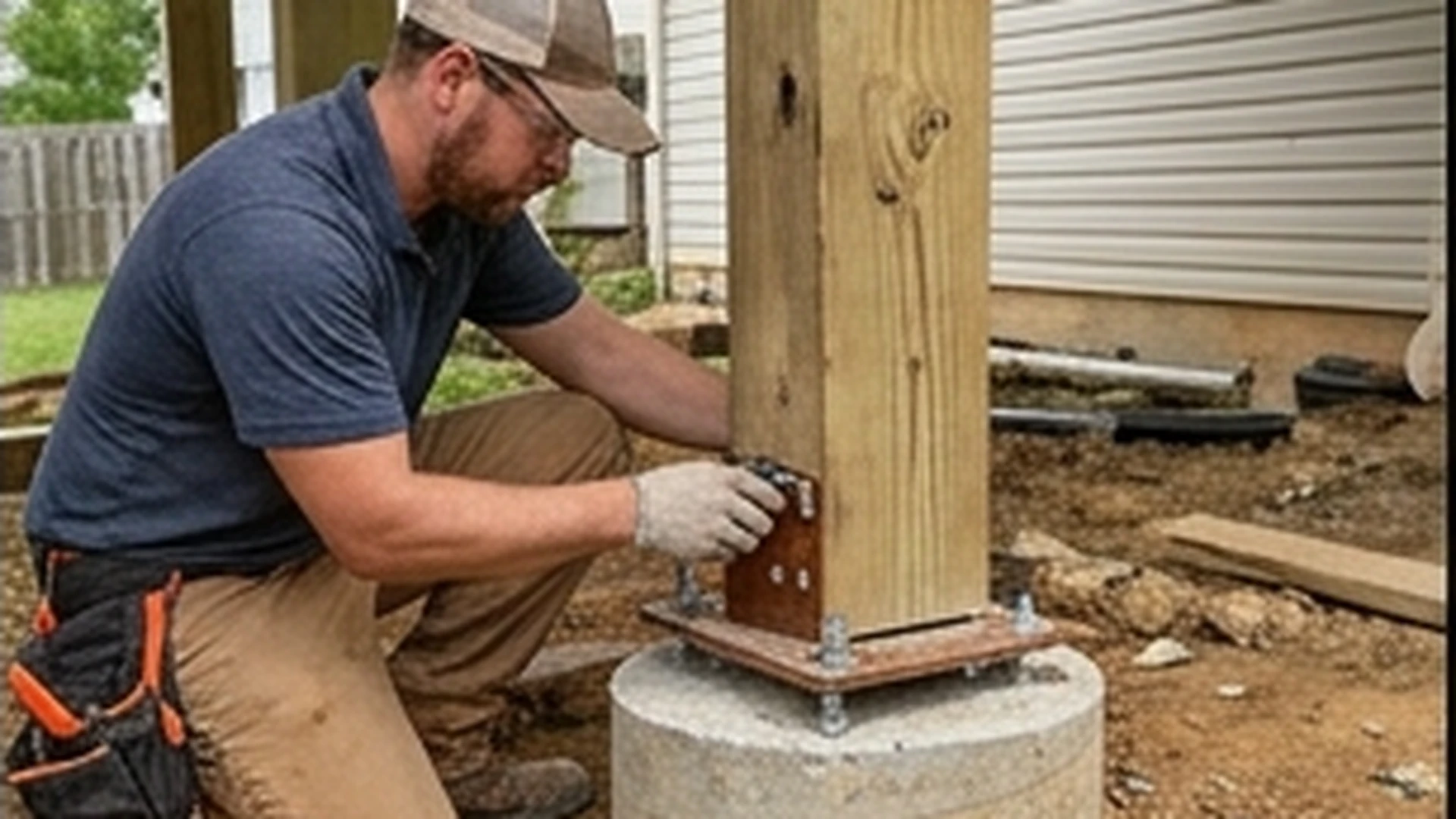
When the shared wall construction makes ledger attachment complicated or uncertain, a freestanding deck — supported on its own posts without a ledger — is an alternative. A freestanding deck requires more posts and footings but avoids the wall penetration and flashing complexity. We discuss the tradeoffs after assessing the wall construction.
Impact on Adjacent Units
Townhome deck construction can affect adjacent unit owners — noise, temporary fence removal, access to shared areas, or visual impact. We work within typical construction hours, coordinate any shared fence moves with adjacent owners, and build without creating drainage issues onto neighboring patios or yards.