Sloped yard deck construction in Frederick

Property-Specific Decks

Sloped Yard and Waterfront Deck Construction in Frederick, MD

Decks on hillside lots and waterfront properties in Frederick County — with post heights calculated from an actual grade survey, diagonal bracing for tall posts, and any permit overlays for sensitive areas.

01Survey the Grade Before Setting Posts

Post heights on a sloped lot vary significantly from one post location to another. Actual post heights must be calculated from a grade survey — not estimated from the slope appearance. An incorrect post height changes the load calculation.

02Brace Tall Posts for Lateral Loads

Posts over 8 feet tall require diagonal bracing between posts to resist lateral forces that cause racking. The taller the post, the more critical the bracing. Hillside decks with posts over 10 feet need an engineered bracing plan.

03Sensitive Area Permits

Properties near streams, wetlands, or the Chesapeake Bay watershed in Frederick County may require a sensitive area or buffer approval in addition to a standard building permit. We confirm the applicable permits for the specific parcel.

Frederick Sloped Lot Planning

Sloped Yard Decks: What a Hillside Lot Actually Requires

A sloped yard deck is a significantly more complex structural project than a flat-lot deck. Tall posts carry not just vertical loads but act as columns resisting lateral forces in both directions. The load path from the deck surface through multiple posts of varying heights to footings of varying depths must be engineered correctly. We size and brace posts for actual conditions on the hillside, not for the conditions on a flat lot.

Post Sizing and Bracing for Tall Posts: The Engineering That Matters

A 6x6 post carries the expected vertical load from the tributary deck area above it. But a tall post also acts as a column subject to buckling under the same vertical load — and the taller the post, the more the buckling risk increases. An 8-foot 6x6 post carries a very different load than a 4-foot 6x6 post carrying the same deck area, because the slender-ratio (height to width) changes the effective capacity.

Diagonal knee bracing between post faces reduces the effective unbraced post height and significantly increases the lateral load capacity. For posts over 8 feet, bracing is required by code. For posts over 12 feet, we typically recommend an engineer review the bracing plan. We don't build tall-post decks without a bracing design — they are a liability without it.

Characteristics of Sloped Lot Deck Projects

  • Post heights that vary by 2-8+ feet across the deck footprint
  • Footing depths that also vary based on post location grade
  • Access below the deck for bracing and framing work
  • Stair design that accounts for a moving grade

What a Sloped Lot Deck Project Includes

  • Grade survey for post height calculation
  • Footing plan with variable depths based on post locations
  • Post sizing and bracing design for actual post heights
  • Sensitive area permit coordination if applicable
What Happens Next

Our Sloped Lot Deck Construction Process

1

Grade Survey

Site measured to determine actual grade at each post location. Post heights calculated from survey data, not estimates.

2

Structural Design and Permits

Post sizing, footing sizing, and bracing plan developed from actual post heights. Sensitive area permits applied for if required. Building permit submitted.

3

Footings

Footings dug to frost depth at varying elevations across the sloped site. Each footing poured to the correct elevation for the post height it will receive.

4

Framing and Bracing

Posts set, beams installed, joists framed. Diagonal bracing installed at each post bay. Framing inspection at this stage before surface is installed.

Waterfront Properties in Frederick County

Properties adjacent to the Monocacy River, the Potomac River tributaries, or any mapped stream in Frederick County may fall within a regulated buffer zone. Maryland's Chesapeake Bay Critical Area regulations apply to areas within 1,000 feet of tidal waters, but county-level resource protection areas cover non-tidal streams as well. We research the specific parcel's sensitive area status and applicable permit requirements before designing any structure within potential buffer zones.

Grade Survey vs. Estimate

Grade surveys are not always required by permit review for residential decks on sloped lots. But building without a survey means post heights are estimated from the visible slope — and visual estimates are often significantly off, especially on complex hillsides with grade changes in multiple directions. An incorrect post height means an incorrect structural design. We conduct grade surveys on all sloped lot projects as a baseline practice, not as an optional extra.

Under-Deck Space on Sloped Lots

A hillside deck with significant post heights creates a substantial under-deck space — which can be used for covered storage, a lower patio, or a lower deck level. Planning the under-deck use at the design stage avoids building over a space that would have been valuable with a different design. We discuss under-deck options when the slope creates more than 6 feet of clearance below the deck at the low end.

Drainage Below a Hillside Deck

Rain falling through an open deck surface on a hillside concentrates at the low-end post locations. Over time, this can saturate the soil at those footing locations and undermine footing stability. We design drainage management — grade swales or perforated pipe — below hillside decks where concentrated drainage is a risk. A deck that undermines its own footings from the inside is an expensive problem to fix after the fact.
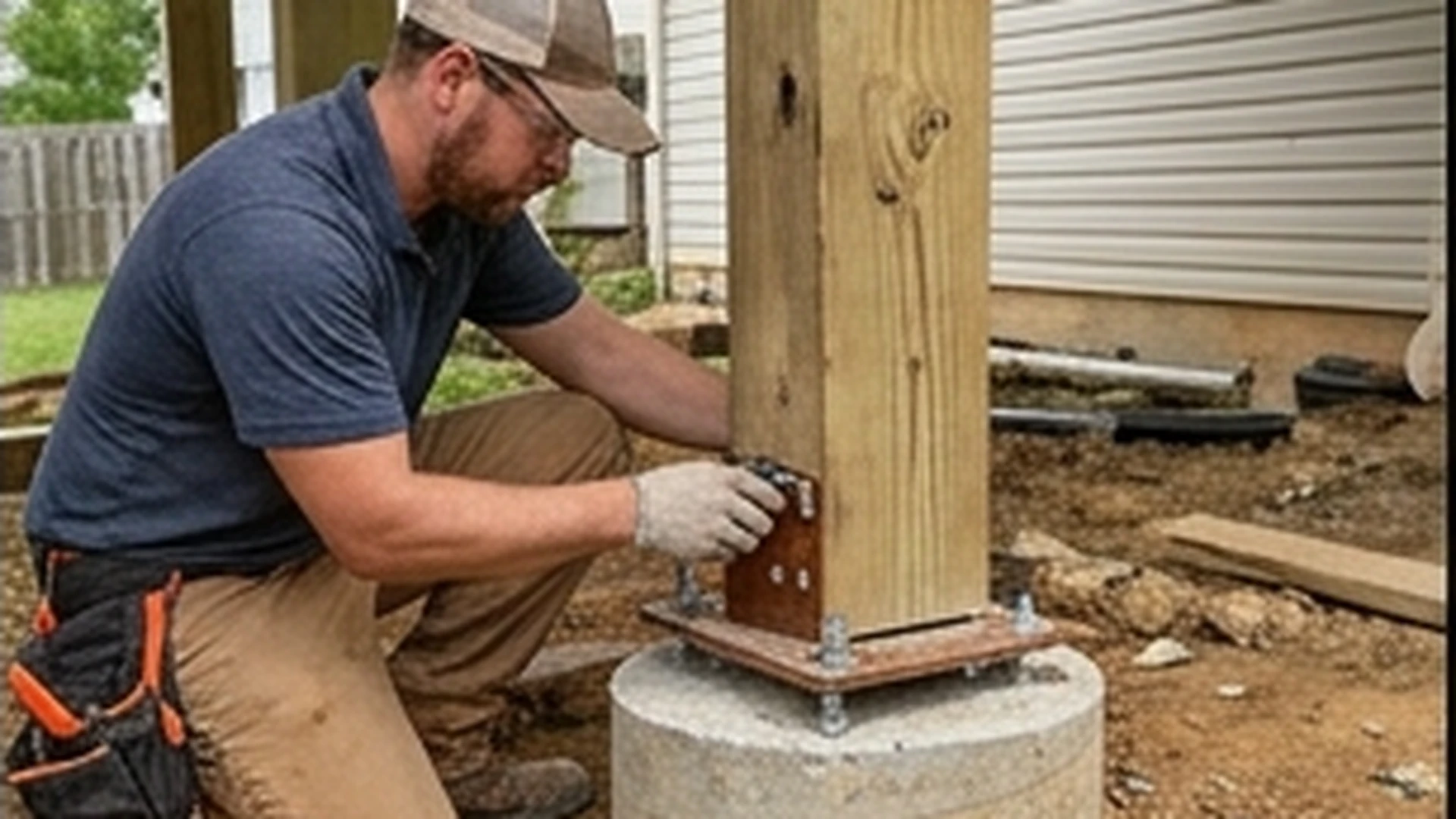

Frederick Sloped Lot Deck

Hillside Lot? The Grade Survey Comes First.

Send photos of your rear yard grade and we will assess whether it's a tall-post framing project and what the structural requirements look like.

Request Service

What to Ask About Sloped Lot Deck Contractors

Ask specifically how they determine post heights on a sloped lot and whether they conduct a grade survey. Ask about the bracing plan for posts over 8 feet. A contractor who says "we'll figure out the post heights when we get there" is not managing the structural risk of a hillside deck. Tall-post decks are not the same calculation as flat-lot decks.

Questions About Sloped Yard and Waterfront Decks

My yard drops about 6 feet over 15 feet — is that considered a sloped lot deck?

A 6-foot grade change over 15 feet (roughly a 40% slope) means some posts will be significantly taller than a standard residential deck post. Any deck post over 8 feet requires diagonal bracing per code, and posts over 12 feet may require engineer review. Your deck would likely have posts ranging from about 2 feet on the high end to 8+ feet on the low end — which is exactly the range where standard deck framing assumptions break down.

Is a permit required for my property near a Frederick County stream?

It depends on the specific stream, its mapped buffer width, and the deck's proposed location relative to the buffer. Frederick County's Resource Protection Area program maps non-tidal streams and their 100-foot buffer zones. Construction within those buffers typically requires a sensitive area permit in addition to a building permit. We research the specific parcel before advising on permit requirements.

How deep do footings need to be on a hillside?

Footings must extend below the frost line — 30 inches minimum in Frederick County — regardless of the grade elevation at each footing location. On a hillside, this means footings at the low end of the slope are dug deeper from the surface (because the surface is lower) to achieve the same frost-depth protection as footings at the high end. Post height, footing depth, and surface elevation all change together on a sloped site.

Related Property-Specific Deck Services